
Stewardship Below the Surface
Utility Advisory Committee Recap | July 14, 2026

Standard Disclaimer: This newsletter is written in my capacity as an individual Port Angeles City Councilmember, Position 7. It represents my personal views, research, and understanding of municipal issues. It is not an official statement on behalf of the Port Angeles City Council or the City of Port Angeles. In compliance with the Washington State Open Public Meetings Act, comments are disabled to ensure that Council deliberation and public business remain within noticed public meetings. Please be advised that any communication sent to me regarding City business, including emails to jhamilton@cityofpa.us, may be considered a public record subject to disclosure under the Washington State Public Records Act.
Most of us don’t spend much time thinking about the sewer system beneath our streets.
That’s probably a good thing.
When we flush a toilet, wash dishes, or take a shower, we simply expect the system to work. If it does, we rarely think about the miles of pipe carrying wastewater beneath our neighborhoods or the decades of planning and maintenance required to keep that system operating.
That was the focus of the July 14 meeting of the Port Angeles Utility Advisory Committee.

Rather than discussing a new construction project or responding to an emergency, the committee spent nearly the entire meeting learning how the City rehabilitates aging sewer infrastructure before it fails. It was one of the most educational committee discussions I’ve attended because it provided a behind-the-scenes look at the engineering, planning, and budgeting decisions that quietly protect one of the City’s most essential public services.
Understanding the Challenge
Public Works staff began by explaining the scale of the City’s wastewater system.
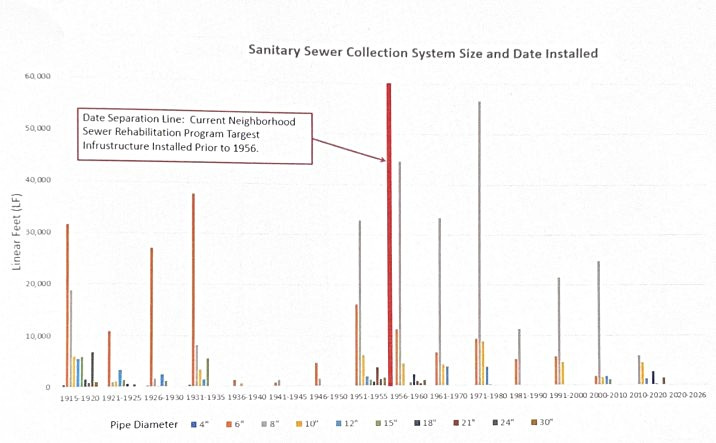
Port Angeles maintains approximately 120 miles of active sanitary sewer. About 40 percent of that system was installed before 1956, meaning many of those pipes are now well beyond the design life engineers originally expected.
The City’s long-term goal is to transition away from reacting to emergency failures and toward a preventative maintenance program. According to the 2024 Wastewater Comprehensive Plan, that transition is expected to take many years, with the goal of reaching a fully preventative maintenance cycle around 2040.
One of the most interesting explanations came when staff described why the City chose 1956 as an important benchmark.
It wasn’t because every pipe installed before that year is failing.
Instead, the City needed a practical way to prioritize where to begin.
As staff put it, “If everything’s an emergency, nothing is.”
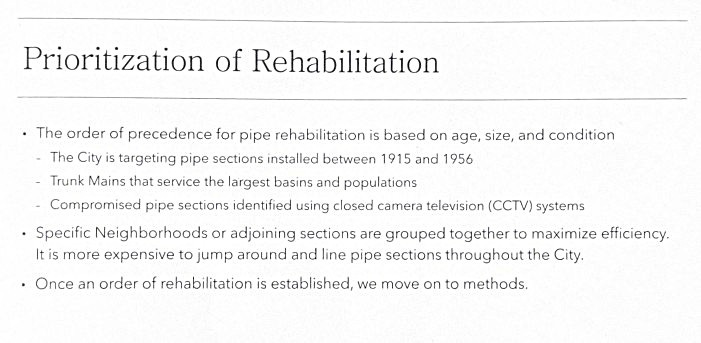
That philosophy drives much of the rehabilitation program. Once the older system was identified, staff then began prioritizing projects based on pipe size, condition, and overall importance to the wastewater collection system.
The largest transmission mains receive particular attention because they serve the greatest number of homes and businesses. A failure in one of those major lines has far greater consequences than a smaller neighborhood collection pipe.
One example discussed during the presentation was the recently rehabilitated 30-inch brick sewer main beneath Francis Street.
Unlike newer pipe materials, these brick mains are especially vulnerable to earthquake movement and ground shifting. Rather than waiting for deterioration to reach the point of failure, the City installed a structural liner inside the existing pipe to strengthen it and significantly extend its useful life.
That example illustrated one of the central themes of the meeting: infrastructure stewardship is often about preventing tomorrow’s emergency rather than responding to today’s.
Why Sewer Pipes Fail
The discussion then shifted from which pipes are rehabilitated to why sewer pipes fail in the first place.
One point I hadn’t fully appreciated before the meeting is that different pipe materials fail for different reasons.
Concrete pipes gradually deteriorate through chemical reactions with wastewater over long periods of time. Clay pipes, on the other hand, are extremely durable chemically but are more brittle and susceptible to cracking from ground movement.
Even the soil surrounding the pipe can become part of the problem.
Staff explained that decades ago, construction trenches were often backfilled with whatever native material happened to be available. That sometimes meant large rocks, organic material, or poorly compacted soil surrounding the pipe. Today, when crews excavate a failed section, they occasionally discover a large rock pressing directly against the pipe, creating a concentrated pressure point that contributed to its eventual failure.
Modern construction standards require much better bedding and backfill practices, but those historical construction methods are still influencing infrastructure performance many decades later.
Ground movement, deteriorated joints, shifting soils, and groundwater infiltration all add to the challenge.
For me, this portion of the discussion reinforced how complex underground infrastructure really is. The condition of a sewer main depends on far more than its age alone.
Why the City Uses Trenchless Rehabilitation
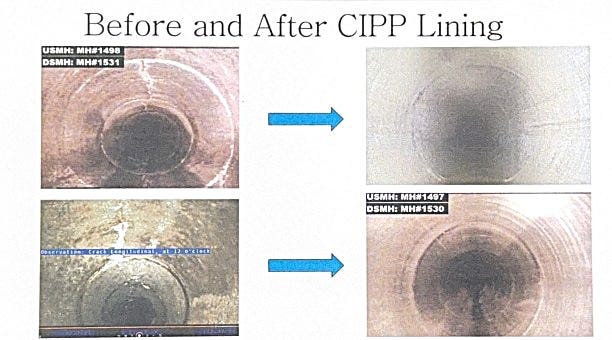
A significant portion of the discussion focused on cured-in-place pipe rehabilitation, commonly known as CIPP.
Rather than excavating an entire street to replace a deteriorated sewer main, crews install a flexible liner inside the existing pipe. The liner is then cured, creating what is essentially a new structural pipe within the old one.
Staff explained that Port Angeles currently uses two primary curing methods.
Larger projects are typically completed using ultraviolet (UV) light, while some projects continue to use steam curing depending on the size and characteristics of the installation.
The advantages are substantial.
Because the existing pipe remains in place, trenchless rehabilitation generally requires less excavation, shorter construction timelines, lower overall costs, and significantly less disruption to neighborhoods than traditional replacement.
At the same time, staff emphasized that rehabilitation is not the right solution for every project.
If a pipe lacks adequate capacity to serve future growth, simply lining the existing pipe will not solve the problem. Likewise, severe structural problems or alignment issues may still require traditional excavation and replacement.
That distinction became one of the most informative parts of the meeting.
The City’s objective is not to use one construction method everywhere. The objective is to match the engineering solution to the problem being solved.
Questions About Environmental Impacts
Committee members also explored questions many residents would probably ask if construction occurred in their own neighborhood.
How safe is the curing process?
What causes the odors sometimes associated with sewer rehabilitation?
Should nearby residents have concerns?
Staff explained that while temporary resin odors may occasionally be noticeable near active work sites, the liner materials remain contained within the pipe during installation.
They also shared an interesting example from the Lincoln Street rehabilitation project.
After construction, one nearby building reported an odor inside the building. When staff investigated, they discovered the rehabilitation project had actually revealed an unrelated plumbing problem inside the building itself. A failed plumbing trap had allowed odors to enter the structure, and the rehabilitation work simply made an existing issue more noticeable.
In other words, if odors are entering a building, it is generally an indication that something within the building’s plumbing system needs attention rather than a failure of the rehabilitation process.
I appreciated this discussion because it addressed practical questions residents may have while also explaining the engineering behind the work.
Planning for the Long Term
As the technical discussion continued, the conversation naturally shifted toward long-term planning and funding.
Committee members asked whether the City could accelerate the rehabilitation program if additional funding became available.
Staff indicated that, in general, the answer is yes.
The program is not currently constrained by contractor availability. Additional funding could allow more rehabilitation work to be completed, although project costs vary significantly depending on pipe size and location. Staff also explained that grouping multiple projects together often results in more competitive bids and better overall value for taxpayers.
That conversation highlighted an important reality.
Maintaining infrastructure is not simply an engineering challenge.
It is also a budgeting challenge.
Every additional dollar invested in planned rehabilitation has the potential to reduce future emergency repairs while extending the life of essential public assets.
My Takeaways
"Maintaining infrastructure is one of the City's most fundamental responsibilities. I believe future budget discussions should continue looking for opportunities to maintain or even accelerate rehabilitation efforts where financially sustainable."
After listening to the presentation and the committee discussion, I shared a few thoughts that reflected what I took away from the meeting.
Maintaining infrastructure is one of the City’s most fundamental responsibilities.
Reliable utilities support nearly everything else we hope to accomplish as a community. Housing, economic development, business investment, and neighborhood quality of life all depend upon infrastructure that quietly performs its job every day.
I also shared that I believe future budget discussions should continue looking for opportunities to maintain or even accelerate rehabilitation efforts where financially sustainable. Preventative maintenance rarely attracts much attention, but it often prevents far more expensive emergencies later.
Finally, I suggested that the committee receive a brief annual progress report summarizing what had actually been accomplished through the rehabilitation program each year.
Questions such as these can help tell the story behind the budget:
How many feet of sewer main were rehabilitated?
Which projects were completed?
How much progress was made toward reducing the rehabilitation backlog?
What priorities remain for the following year?
The Capital Facilities Plan tells us where we intend to go.
An annual progress report would help demonstrate how far we’ve actually traveled.
I appreciated that staff were receptive to the idea and indicated they would explore ways to provide that information in the future.
Final Thoughts
One lesson continues to stand out to me after serving on the Utility Advisory Committee this past year.
Good stewardship is often invisible.
When infrastructure works well, there isn’t much to notice.
Roads stay open.
Businesses continue serving customers.
Homes receive reliable utility service.
Life simply goes on.
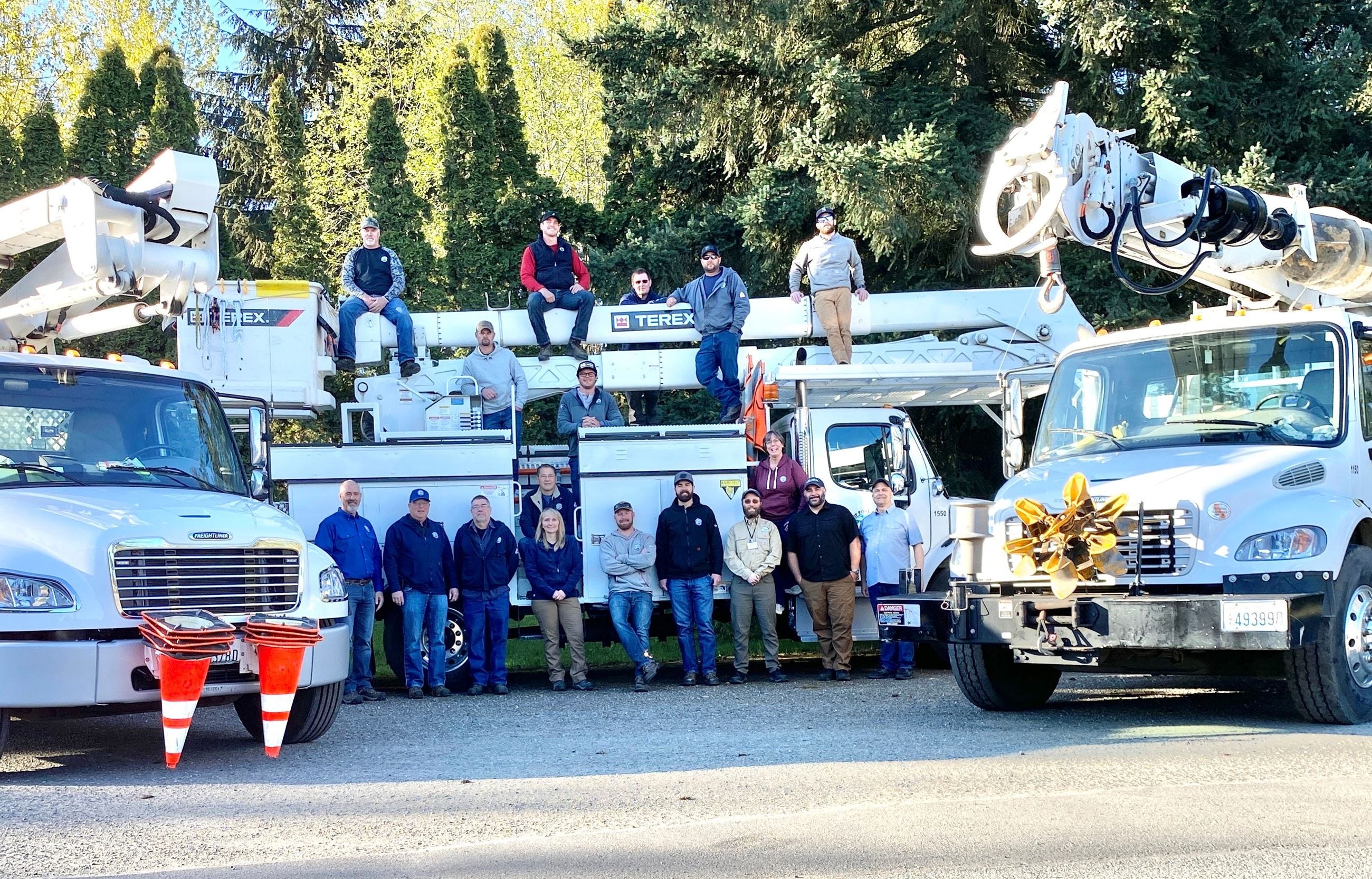
That quiet reliability is the product of decades of engineering, thoughtful budgeting, careful maintenance, and the daily work of City employees who manage systems most of us never see.
Meetings like this remind me that good local government isn’t only about responding to today’s problems. It’s also about making thoughtful investments today that reduce tomorrow’s emergencies.
That kind of long-term stewardship may not always make headlines, but it helps ensure Port Angeles remains a resilient, well-maintained community for years to come.
Thank you, as always, for taking an interest in the work of your local government.
Watch the Meeting
If you’d like to watch the discussion for yourself, I’ve included the full meeting recording above. I encourage residents to watch whenever they have the opportunity. Seeing the questions, explanations, and discussion firsthand provides an even deeper appreciation for the work that goes into maintaining the essential services we rely on every day.
Upcoming Events and Meetings: City Council Meeting - 6:00pm on Tuesday, July 22nd at Port Angeles City Hall Council Chambers and Clallam County Solid Waste Advisory Committee - 3:00pm on Wednesday, July 23rd at Clallam County Board of Commissioners Meeting Room.