
Looking Ahead While Managing Today
Port Angeles City Council Meeting Recap | July 21

Standard Disclaimer: This newsletter is written in my capacity as an individual Port Angeles City Councilmember, Position 7. It represents my personal views, research, and understanding of municipal issues. It is not an official statement on behalf of the Port Angeles City Council or the City of Port Angeles. In compliance with the Washington State Open Public Meetings Act, comments are disabled to ensure that Council deliberation and public business remain within noticed public meetings. Please be advised that any communication sent to me regarding City business, including emails to jhamilton@cityofpa.us, may be considered a public record subject to disclosure under the Washington State Public Records Act.
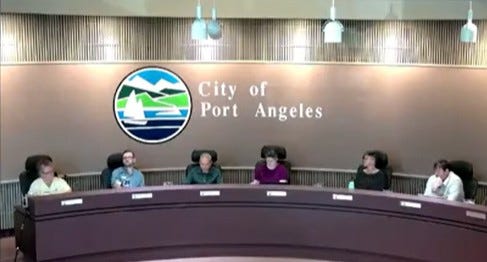
Mayor Kate Dexter was absent and excused from Tuesday evening’s City Council meeting, so Deputy Mayor Navarra Carr presided over the meeting.
Like many Council meetings, this one did not include headline-grabbing decisions. Instead, much of the evening focused on the steady work of governing: reviewing public input, approving routine business, discussing long-term utility planning, asking questions about public safety investments, and receiving updates from Councilmembers and City staff.
Below is a recap of the meeting in the order the agenda was considered.
First Public Comment
The meeting opened with a single public comment from a community member who addressed the Council regarding homelessness and related community concerns.
Public comment is an important opportunity for residents to speak directly to the Council before we begin our business. While Councilmembers generally do not respond during the meeting, every comment becomes part of the public record and helps inform future policy discussions.
I want to personally encourage residents to participate in public comment whenever they have something to share with the Council. I listen carefully to every speaker because those comments often provide valuable insight into issues affecting our community, perspectives on agenda items, and concerns that may not otherwise come before the Council. Even when I don’t ultimately agree with every position expressed, hearing directly from the people we serve helps me become a better-informed councilmember.
Healthy local government depends on public participation. Whether you choose to speak in person, submit written comments, or simply attend a meeting, your involvement helps strengthen our community and our democracy.
Consent Agenda
Following approval of the agenda, the Council considered the Consent Agenda.
Most of the business items originally listed under Section J of the agenda were moved to the Consent Agenda and approved together. The only item removed for separate discussion was Item J4, the proposed purchase of two Ford F-150 Police Responder vehicles for the Port Angeles Police Department.
Several items approved through the Consent Agenda are worth briefly highlighting.
Electric Utility Power Resource Plan
The Council scheduled a future public hearing on the City’s Electric Utility Power Resource Plan.
This plan helps guide the City’s long-term electric resource planning and fulfills state planning requirements. It examines projected electricity demand, expected energy resources, conservation opportunities, and strategies for maintaining a reliable electric system while managing costs over the coming years.
Although this type of planning document can seem technical, it plays an important role in shaping future utility decisions that affect every electric customer in Port Angeles. Planning today helps ensure the City is prepared to meet future energy needs while maintaining reliable service and making thoughtful long-term investments.
Scheduling the public hearing allows residents an opportunity to review the document and provide input before the Council takes final action. If you are interested in how the City plans for future electric demand, conservation, and resource development, I encourage you to review the Power Resource Plan before the public hearing.
FEMA BRIC Resolution
The Council also approved a resolution designating the City Manager as the City’s authorized representative for FEMA’s Building Resilient Infrastructure and Communities (BRIC) grant program.
Although procedural, this designation is required before the City can submit certain federal grant applications. Authorizing a representative does not obligate the City to pursue any specific project or accept grant funding. Instead, it ensures that the City is eligible to apply for BRIC grants if opportunities arise.
Programs like BRIC are designed to help communities invest in projects that reduce long-term risks from natural hazards before disasters occur. Depending on the project, grant funding can support infrastructure improvements, flood mitigation, seismic resilience, wildfire preparedness, and other investments that strengthen community resilience while reducing future recovery costs.
While this resolution received little discussion during the meeting, actions like these are an important part of ensuring the City remains eligible for outside funding opportunities that can help offset costs for local taxpayers.
Late Agenda Item
Because the City Council will not meet again until August 18, staff requested adding a late item to the Consent Agenda authorizing a conditional Stage 3 Water Shortage Declaration should drought conditions worsen before the next regular Council meeting.
Earlier that day, the City announced that it had entered a Stage 2 Water Shortage, which includes additional water conservation measures in response to ongoing drought conditions. With nearly four weeks until the next regular Council meeting, staff recommended that Council also authorize a conditional Stage 3 declaration if conditions deteriorate further before August 18.

Rather than requiring a special Council meeting to respond, this action provides the City with the flexibility to implement additional conservation measures promptly if they become necessary. It is important to note that Council did not declare a Stage 3 Water Shortage during this meeting. Instead, Council approved a contingency measure that would allow the City to respond quickly if drought conditions continue to worsen before the next scheduled meeting.
Bonneville Power Administration Update
Readers may remember this topic from my recent Utility Advisory Committee recap. During that meeting, the Utility Advisory Committee discussed the proposed agreement in detail and unanimously recommended that the City Council approve it.
In simple terms, Tier 2 power refers to electricity purchased beyond the City’s allocation of lower-cost federal hydropower. As electricity demand grows throughout the Pacific Northwest, utilities increasingly need to plan for how additional power purchases could affect future costs, reliability, and long-term rate planning.
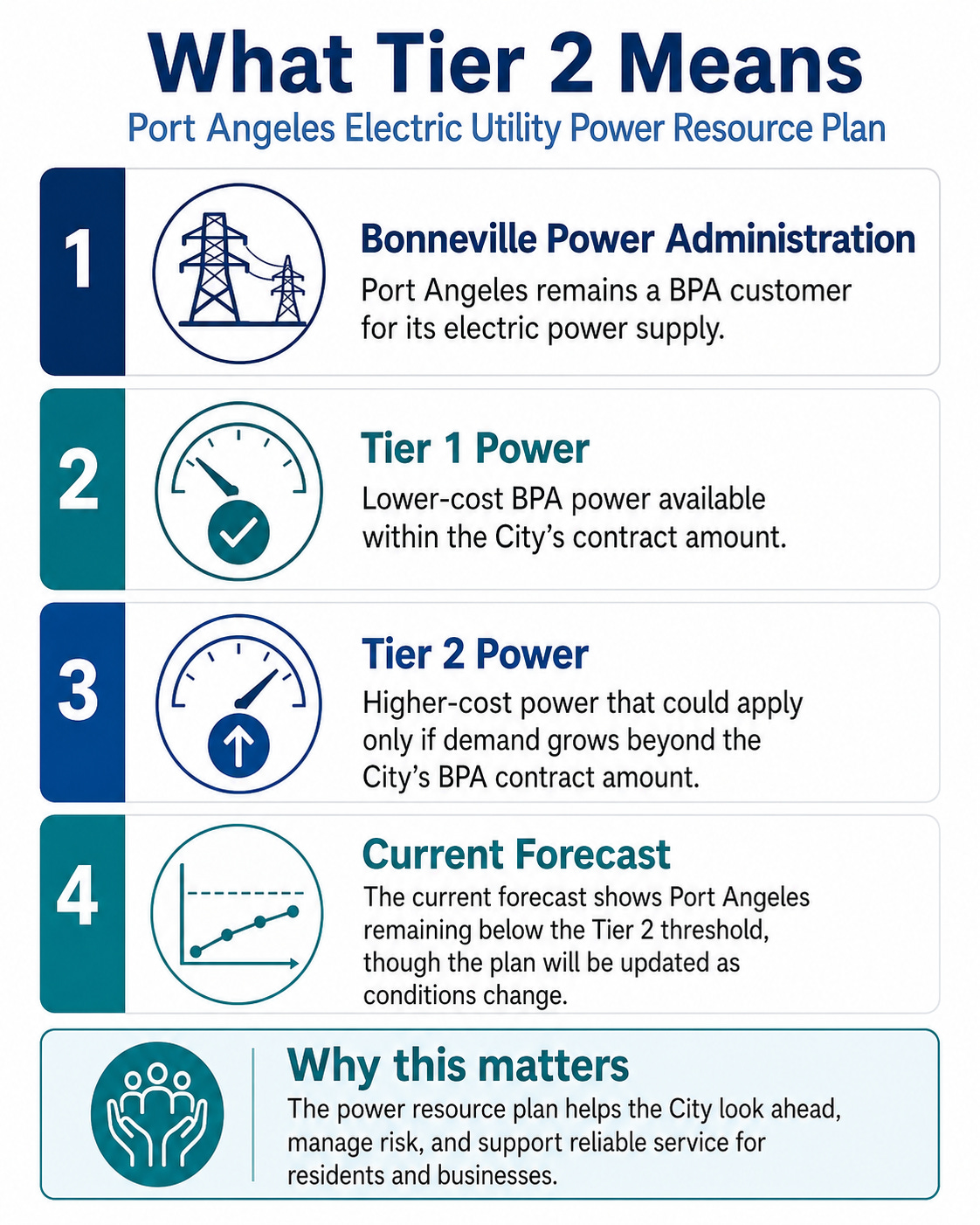
Although much of the discussion involves technical utility planning, these decisions help shape how Port Angeles plans for future energy needs while maintaining reliable electric service.
Taking a Closer Look at the Purchase of Two Police Department Vehicles

The primary discussion of the evening centered on Item J4, authorizing the purchase of two Ford F-150 Police Responder trucks for the Port Angeles Police Department.
Unlike the other business items, this proposal remained on the regular agenda to allow additional Council discussion and questions before a vote was taken.
As I reviewed the agenda packet, I had several questions that I wanted answered before making my decision.
Why is the City purchasing these vehicles through Arizona?
One question I received from a constituent after the agenda packet was published was why the purchase documents referenced a dealer in Arizona instead of a Washington dealership.
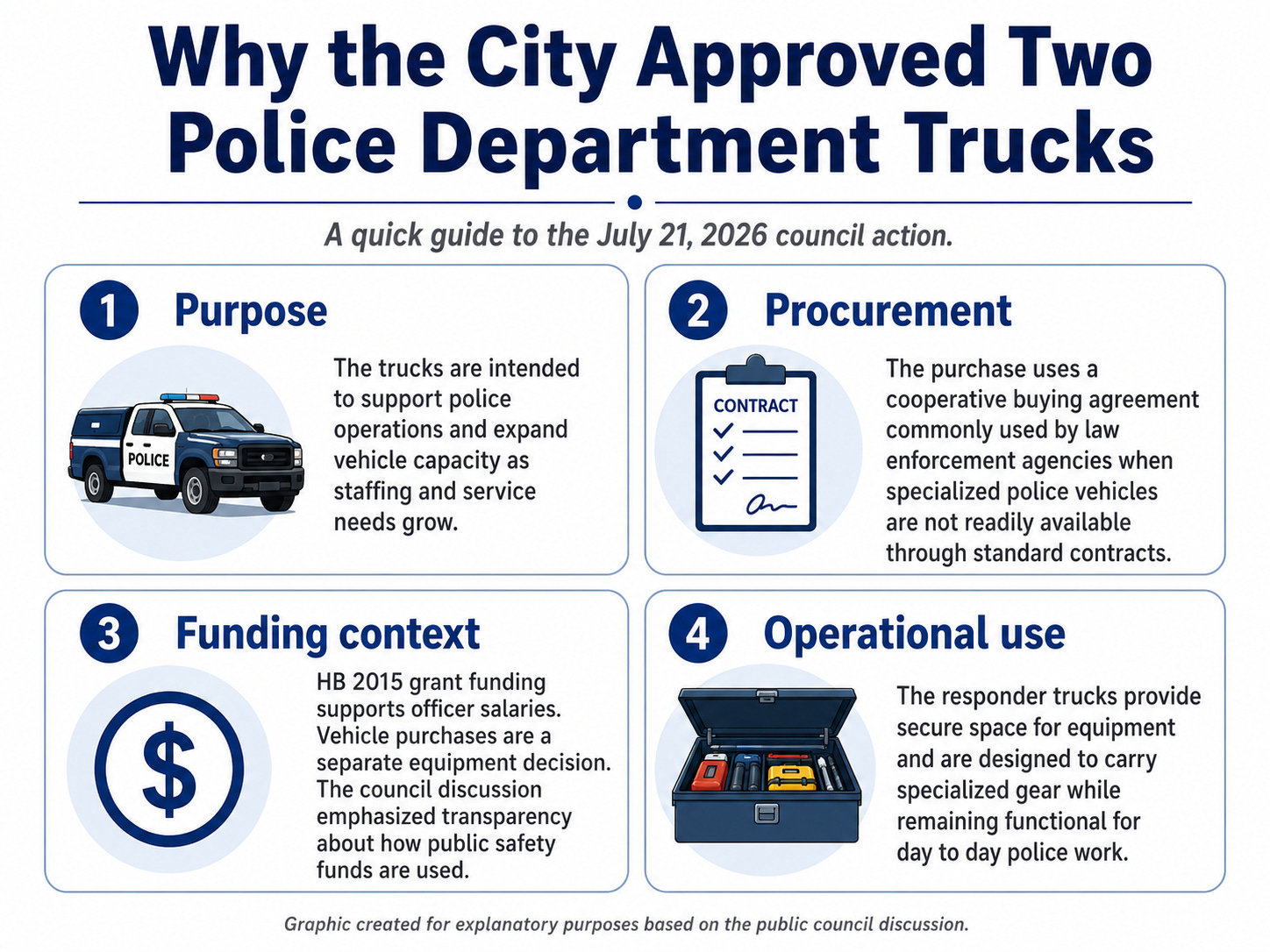
Chief Brian Smith explained that the City participates in cooperative purchasing agreements that allow public agencies to purchase specialized equipment through competitively awarded contracts. In this case, the cooperative purchasing agreement provides access to vendors that specialize in police vehicles and equipment.
Police vehicles are a highly specialized market. Not every dealership sells or supports law enforcement fleets, and those that do often participate in national purchasing cooperatives used by cities across the country. Chief Smith noted that a number of large cities in both Washington and Oregon use the same purchasing agreement because it provides competitive pricing while meeting public contracting requirements.
Although the dealer is located in Arizona, the vehicles will still be outfitted through the City’s existing local upfitter in Lakewood using separate contracts.
Will these trucks have enough storage capacity?
I also asked whether these trucks would have sufficient space to carry all of the specialized equipment officers use during a typical shift.
Chief Smith explained that each truck will include a custom rear equipment storage system with pull-out compartments that maximize available space while making equipment easier to access. He confirmed that all of the equipment currently carried in patrol vehicles will fit while still providing a prisoner partition comparable to the department’s existing patrol fleet.
His explanation gave me confidence that these vehicles are being configured around the operational needs of our officers rather than simply replacing one vehicle with another.
Connection to House Bill 2015
Another councilmember asked how this purchase related to the public safety funding discussed during our previous Council meeting, when the Council approved implementing the local public safety sales tax authorized under House Bill 2015.
Chief Smith explained that the state grant associated with House Bill 2015 helps fund officer salaries, while the local public safety sales tax provides broader flexibility for future public safety expenses, including equipment. However, because the sales tax will not begin generating revenue until January, those funds are not yet available for these purchases.
He also noted that the patrol vehicles identified for replacement in the Capital Facilities Plan remain in good condition. Rather than replacing those vehicles early, the department plans to continue using them while purchasing these additional trucks to support the department’s expanding staffing needs as new officers are hired.
I thought this exchange was especially helpful because it connected Tuesday’s discussion to the Council’s previous meeting. It illustrated how recent decisions about public safety funding fit into the department’s longer-term planning for staffing, equipment, and fleet management.
After asking my questions and hearing the discussion, I felt comfortable supporting the purchase. Discussions like these are an important part of the Council’s oversight role. While staff provide professional recommendations, it is the Council’s responsibility to ask questions, understand the reasoning behind significant expenditures, and ensure that public funds are being used thoughtfully before taking action.
Council Reports
Councilmembers then shared updates from committees, regional organizations, and other City-related activities that have occurred since our previous meeting.
During my report, I shared several opportunities I’ve had over the past two weeks to better understand the people, departments, committees, businesses, and partner organizations that help make Port Angeles work. One of my goals as a councilmember is to continually learn from those who serve our community in different ways. The more I understand how different parts of our community operate, the better prepared I am to ask informed questions and make thoughtful policy decisions when issues come before the Council.
Learning from the Fire Department
On July 13, I had the opportunity to spend several hours with Fire Chief Dan Sharpe at the Port Angeles Fire Department.
In addition to touring the facility, we discussed the department’s inspection program and the many responsibilities the department carries beyond emergency response. One aspect that stood out to me was learning more about the department’s commitment to firefighter wellness, including the on-site fitness facilities that help firefighters maintain the physical readiness required for a profession that regularly places them in physically demanding and high-stress situations.
I’m also planning a future ride-along with one of the fire crews so I can gain an even better understanding of their day-to-day operations and the challenges they encounter while serving our community.
Utility Advisory Committee
On July 14, the Utility Advisory Committee received a presentation on the City’s ongoing sewer rehabilitation program.
As I mentioned earlier in this newsletter, maintaining our underground infrastructure continues to be one of the City’s most significant long-term responsibilities. Much of our wastewater system includes infrastructure approaching or exceeding 100 years of age, including sections of historic brick sewer pipe.
I appreciated the presentation from Scott and the Public Works team because it reinforced the importance of taking a proactive approach to infrastructure maintenance. Rehabilitating aging sewer lines before they fail is often far less costly and disruptive than responding to emergency failures after they occur.
Connecting with the Community
On July 17, I had the opportunity to meet with community member Danny Steiger, owner of Angeles Hardwood.
One of the parts of serving on the City Council that I enjoy most is the opportunity to sit down with members of our community, hear about their experiences, and better understand the perspectives they bring. Conversations like these help me learn more about the people, businesses, and organizations that make Port Angeles such a unique community.
While these conversations don’t involve Council decisions or commitments, they provide valuable context and help me stay connected with the people who live and work in Port Angeles.
Looking Ahead
Between now and our next Council meeting, I have several additional opportunities to continue learning.
On July 23, I’ll attend a meeting of the Clallam County Solid Waste Advisory Committee at the County Courthouse.
Later this month, I’ll also visit the Clallam County Public Defender’s Office to learn more about its operations and how its work intersects with the City’s role in the criminal justice system. As the City continues working with our county partners on criminal justice issues, I believe it is important to understand how each part of the system operates and how those pieces fit together.
Council reports are one of my favorite parts of each meeting because they provide residents with a broader picture of the work taking place outside Tuesday evenings. Committee meetings, department visits, regional partnerships, conversations with community members, and discussions with local organizations often provide the background and context that inform the policy discussions residents see during regular Council meetings.
Final Public Comment
Three community members spoke during the final public comment period, raising issues related to recovery services, capital-project spending, transportation planning, homelessness, and public safety.
Recovery and Outreach Services
A representative of Reflections Counseling Services Group provided an update on the REAL Program, which stands for Recovery, Empowerment, Advocacy, and Linkage.
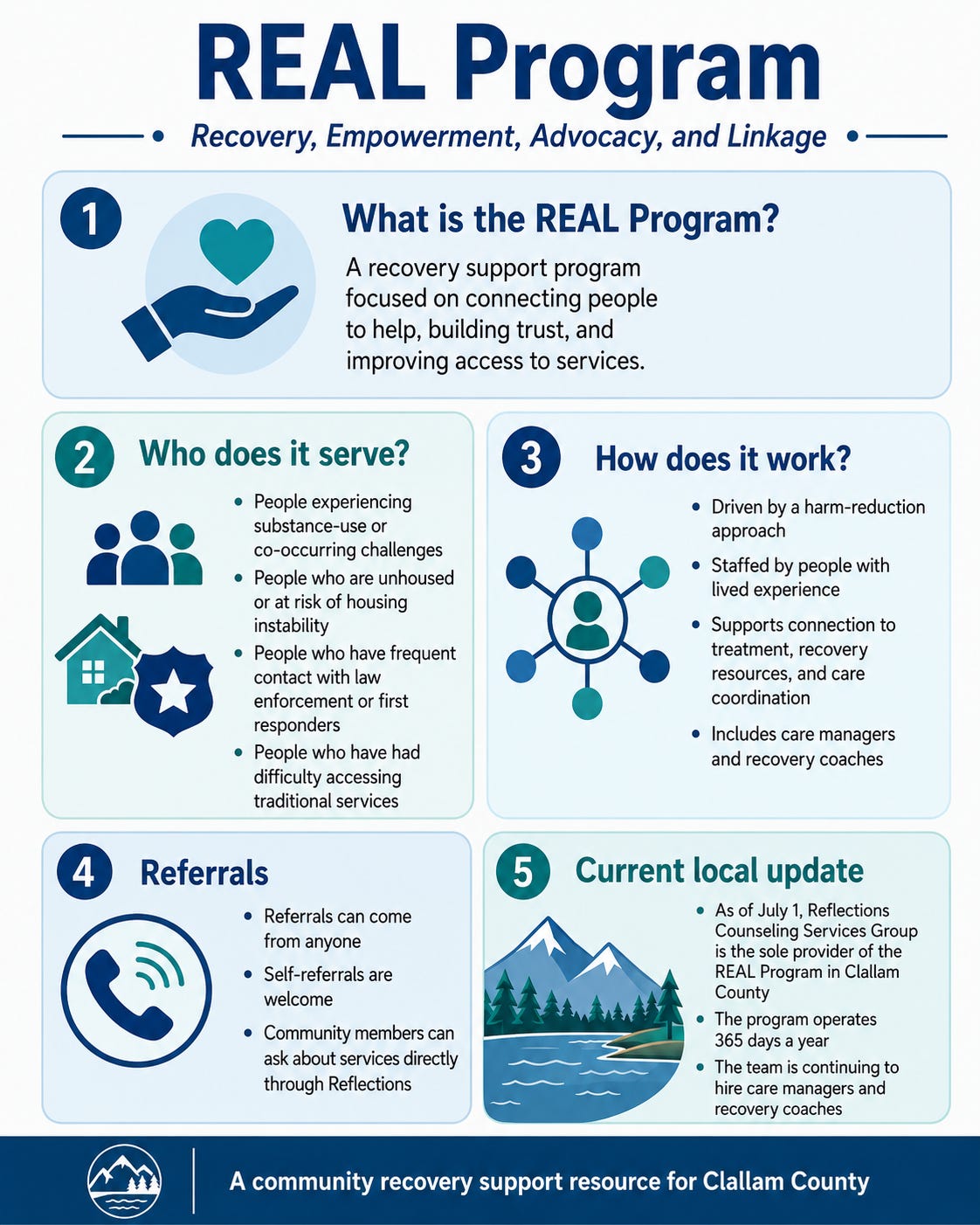
The program serves people experiencing substance-use or co-occurring challenges, including individuals who have frequent contact with law enforcement or first responders and those who have experienced difficulty accessing services through more traditional systems. The speaker explained that, as of July 1, Reflections is the sole provider of the REAL Program in Clallam County and is continuing to hire care managers and recovery coaches.
The speaker emphasized that referrals may come from community partners, service providers, or individuals seeking help for themselves. Councilmembers and community members were also invited to an upcoming Recovery Month open house planned for late September.
Capital Projects and Transportation Spending
A Port Angeles resident commented on several projects included in the City’s capital-planning documents.
The speaker questioned the proposed route and expected use of the 10th Street Bike Boulevard, suggesting that other routes may be more practical for cyclists. The speaker also expressed concern about the cost of the City’s proposed neighborhood traffic-circle program and suggested that four-way stop signs could provide a less expensive alternative.
Additional questions were raised about the funding and scope of the transportation project near 10th and C Streets. More broadly, the speaker encouraged the Council to consider whether state grant funding could be directed toward projects such as sewer rehabilitation and other core infrastructure needs.
The comments reflected an important question that appears throughout the City’s capital-planning process: how should limited local and outside funding be prioritized among transportation improvements, safety projects, utility infrastructure, and other community needs?
Outreach, Homelessness, and Transportation Safety
A second Port Angeles resident spoke remotely and began by expressing support for the services provided through Reflections Counseling Services Group.
The speaker asked whether residents could directly contact the program when they encounter someone who may benefit from outreach, particularly during weekends or times when emergency dispatch and law-enforcement resources are already heavily committed.
The speaker also addressed public claims that law-enforcement agencies are transporting unhoused people into Port Angeles. The speaker disputed those claims and encouraged anyone with specific evidence of misconduct to make a formal report rather than relying on unsupported accusations during public meetings.
Finally, the speaker commented on the proposed traffic circles and bicycle routes. The speaker suggested that the location of a possible traffic circle on Laurel Street should be evaluated based on where it would most effectively slow downhill traffic. The speaker also noted that electric bicycles have made steeper routes more accessible and offered a different perspective on the potential use of the proposed 10th Street Bike Boulevard.
The final public comment period demonstrated how residents can examine the same proposals from very different perspectives. Those comments become part of the public record and provide Councilmembers with additional information and questions to consider as projects and policies move forward.
Watch the Full Meeting
If you would like to watch the complete meeting, including the staff presentations, Council discussion, and public comments, you can view the recording below.
Additional Resources
Local government works best when residents stay informed, ask questions, and participate in the process. Thank you for taking the time to follow along with the work of your City Council.
The next regular Port Angeles City Council meeting will be held on Tuesday, August 18, 2026.